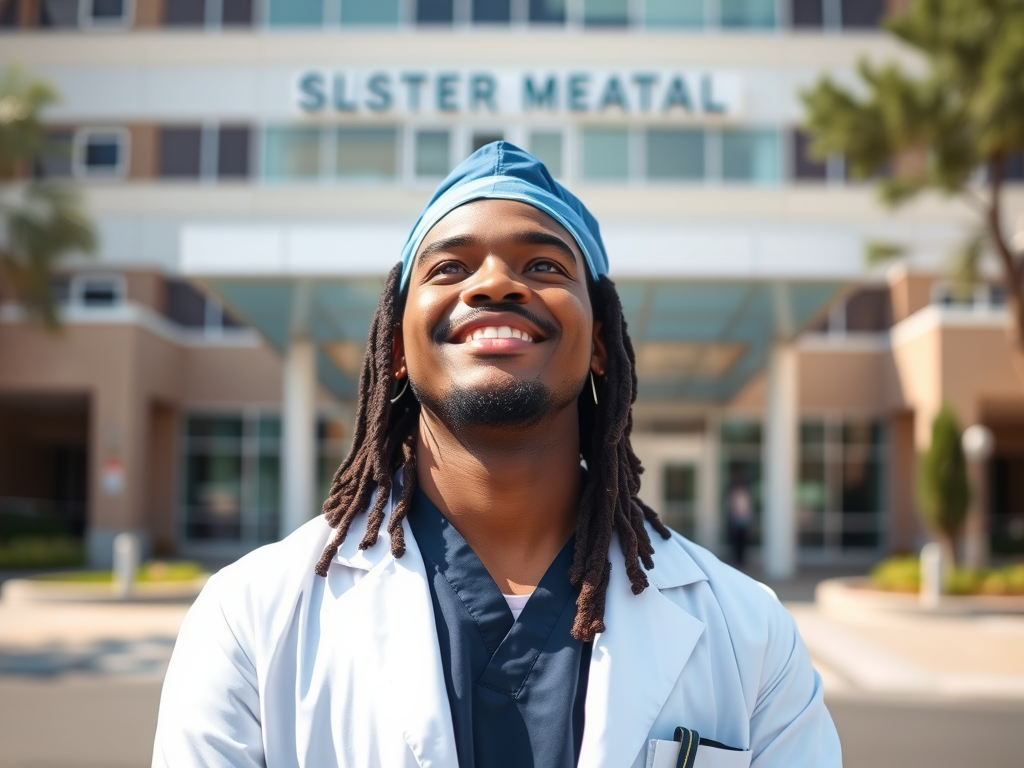
There’s a unique quiet that settles in when you’re standing at a significant doorway. For medical students, that doorway is the residency application. It’s a moment suspended between years of relentless effort and a future that is still just a hopeful outline. As I navigate this process, surrounded by personal statements and program lists, I’m struck by a profound sense of déjà vu. This feeling of packaging up your life, your history, and your potential for others to review—it’s a territory I’ve known before.
For those of us who grew up in the foster care system, our lives were often summarized in case files. We were collections of reports, assessments, and decisions made by others, all attempting to chart a course for our lives. The goal was always to find the right “placement.” Now, years later, the language has changed, but the feeling is strikingly familiar. My ERAS application is a new kind of file, but this time, I am its sole author. This time, I am the one charting the course.
The process of applying to residency is, in many ways, a search for a professional home. We look for programs with the right training, the right culture, and the right people to help us grow. The word “home” itself carries a complex weight for anyone from a disadvantaged background. It’s a concept we learned to define for ourselves, often built from chosen family, supportive mentors, and communities that offered us a place to belong. This search has taught me to look beyond the prestige or the name on the building. It has taught me to look for the heart of a place. Is there genuine mentorship? Is there a commitment to serving the underserved? Is there a team that lifts each other up? These are the questions I’m asking, because the last decade has proven that the right environment isn’t just a preference; it’s the foundation upon which everything else is built.
As I look at residency programs, I find myself lingering on the residents’ hobbies. It’s not because I think it will have a profound effect on my training, but because it would be nice to find someone in the long years ahead who appreciates food and cooking the way I do. I still remember the feeling of camaraderie during an audition rotation at Cornell, when a fellow student and I agreed that not all water tastes the same. That stuff matters.
Perhaps the most empowering part of this journey has been writing the personal statement. For years, my story was written for me in official documents. Today, I get to tell it myself. I get to connect the dots between the resilient kid who navigated a complex system and the determined medical student ready to care for patients. After all, not everyone in undergrad had to work three different jobs while trying to score in the 90th percentile on the MCAT. And not everyone has the experience of living in so many different environments, connecting with so many families inside their homes. This isn’t a story about hardship for the sake of it; it’s a story about turning challenges into strengths.
To any young person reading this who is facing their own set of case files—whether they’re from a social worker, a guidance counselor, or just the quiet doubts in your own mind—know this: You are the author of your own story. Every obstacle you overcome is a skill you’ve earned. Every time you choose to keep going, you are building a resilience that will be your greatest asset in any career you choose.
This application isn’t just an endpoint; it’s a milestone on a much longer journey. It’s a testament to the idea that where you come from does not have to dictate where you are going. I don’t know which hospital will be my new home yet, but I step toward this doorway with gratitude and a steady confidence. The course is charted, and I’m ready for the next leg of the voyage.
Leave a Reply